Nutrition · 11 min read
Why Eating Less and Walking More Isn't Always Enough After Menopause
November 6, 2026
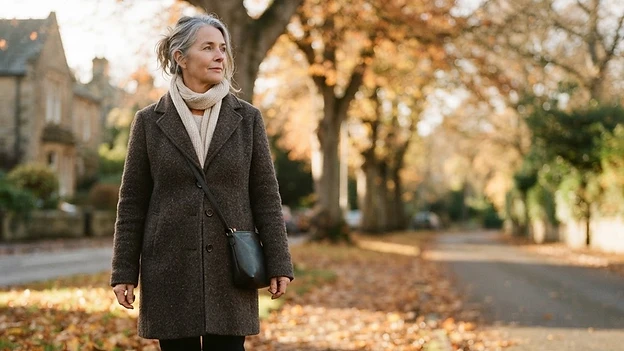
You're eating less. You're walking more. And you're wondering why your body still doesn't look or feel the way you expected it to.
Maybe the scale has barely moved.
Maybe you've lost weight, but your middle still feels softer than it used to.
Or maybe you're doing everything that worked in your 30s, only now you're exhausted, hungry, and wondering what else you're supposed to give up.
I hear this from women all the time.
And I understand the frustration.
I've lost 80 pounds. I've maintained that weight loss through perimenopause and into menopause. I've built muscle, trained for photoshoots, and learned exactly what it takes to make my body leaner.
I've also learned that a lower number on the scale doesn't automatically mean a stronger, healthier, or better-functioning body.
And that's where I think a lot of the advice women receive after 50 falls short.
First, let's clear something up about menopause and weight loss.
Menopause doesn't make fat loss impossible.
You don't suddenly become immune to an energy deficit because your estrogen has declined.
But the changes happening around menopause can make managing your weight and body composition more complicated.
Estrogen changes can influence where your body stores fat, often shifting more of it toward your abdomen.
Muscle mass and strength can decline with age, particularly when we're not doing anything to maintain them.
Sleep disturbances can affect appetite, energy, and how much we move throughout the day.
And for many women, this is happening during an already demanding stage of life.
You're working, managing a household, caring for children or aging parents, and possibly doing all of those things at once.
So yes, calories still matter.
But simply telling a woman to eat less and move more doesn't tell her how to preserve muscle, manage recovery, or build a routine she can actually maintain.
And those things matter too.
Walking is wonderful. But it can't do everything.
I walk almost every day.
It's one of the simplest ways I keep movement part of my life, and I encourage my clients to walk too.
It supports cardiovascular health, helps with blood sugar management, and gives us a way to be active without needing special equipment or an elaborate schedule.
But walking doesn't provide the same muscle-building stimulus as progressive resistance training.
And that matters after menopause.
If you're losing weight through calorie restriction and walking alone, some of the weight you lose may come from muscle as well as fat.
That's not what we want.
We want to preserve as much muscle as possible while reducing excess body fat.
Because muscle isn't just something that makes your arms look good in a sleeveless dress.
It's what helps you get off the floor, carry groceries, climb stairs, lift your grandchildren, and remain physically capable as you age.
It's also important for metabolic health and maintaining strength.
So by all means, keep walking.
But don't expect your daily steps to do the job of strength training.
Eating less can backfire when you start cutting the wrong things.
Here's something I see regularly when women come to me for coaching.
They've been trying to lose weight by eating smaller portions, skipping meals, or cutting out entire food groups.
But when we look at what they're actually eating, they're often falling short on protein.
Breakfast might be toast and coffee.
Lunch is whatever's left after feeding everyone else.
By midafternoon they're hungry, tired, and looking for something quick.
Then they feel guilty because they couldn't stick to their plan.
The problem isn't necessarily a lack of discipline.
Sometimes the plan itself is making things harder than they need to be.
If you're trying to lose fat while maintaining muscle, you need enough protein and a reason for your body to keep that muscle.
That's where resistance training comes in.
How much protein do you actually need?
For many healthy, active midlife women, approximately 1.2 to 1.6 grams of protein per kilogram of body weight per day is a useful starting range. Some women may benefit from more, depending on their training, calorie intake, and goals.
For a woman weighing 150 pounds, that's approximately 82 to 109 grams per day.
You don't need to eat six times a day or live on protein shakes.
You could start by making sure there's a meaningful source of protein at each meal.
For example:
- Breakfast: two eggs, Greek yogurt, and berries.
- Lunch: leftover chicken with potatoes and vegetables.
- Dinner: beef, chicken, fish, or another protein source with the meal you're already making for your family.
- If needed: cottage cheese, Greek yogurt, or another convenient protein-rich snack.
Depending on your portions, you may need to adjust those meals to reach your target. The point isn't to follow this exact menu.
It's to stop treating protein as something you'll hopefully get enough of by the end of the day.
And no, you don't need to make separate dinners for yourself and everyone else.
I have a large family. I have absolutely no interest in running a restaurant out of my kitchen.
We eat the same basic meals. I adjust my portions to meet my needs.
That's a much more realistic strategy than preparing a completely different meal every night.
If you have kidney disease or another condition requiring dietary protein restrictions, your target should be individualized with your healthcare provider.
You need to give your body a reason to keep its muscle.
This is where strength training earns its place.
And no, I'm not talking about spending two hours in the gym five days a week.
For many women, two or three well-planned full-body strength sessions per week are a very reasonable starting point.
You need movements that challenge your major muscle groups.
That might include:
- A squat or leg press variation.
- A rowing movement for your back.
- A chest press or push-up variation.
- A hip hinge or another exercise for your hips and glutes.
- A few additional exercises based on your abilities and goals.
You don't need to start heavy.
But the exercises do need to become appropriately challenging over time.
If you're doing the same ten repetitions with the same five-pound dumbbells year after year, and those repetitions have become easy, you're probably not giving your muscles much reason to adapt.
That doesn't mean you need to double the weight tomorrow.
It might mean increasing a few repetitions, using a slightly heavier dumbbell, or choosing a more challenging version of the exercise.
And if your knees, hips, or back are giving you trouble, we modify the exercises.
I do this in my own training.
I don't build my workouts around heavy squats and deadlifts anymore because they tend to aggravate my back and knees.
Instead, I use movements like leg presses, step-ups, back extensions, and cable exercises.
I'm still training hard.
I'm simply choosing exercises that allow me to challenge my muscles without unnecessarily irritating my joints.
The goal is to build strength, not prove you can tolerate a particular exercise.
What about that stubborn menopause belly?
This is where I think we need to be particularly careful about what we're promising women.
Yes, declining estrogen is associated with changes in fat distribution, including increased abdominal fat.
Yes, resistance training can help preserve and build muscle.
And yes, nutrition and activity matter.
But no exercise will selectively burn fat from your stomach.
Not crunches.
Not planks.
Not a special menopause workout.
And certainly not some supplement promising to balance your hormones and melt belly fat.
If you want to reduce body fat, your overall energy balance still matters.
But if you also want to look and feel stronger, the composition of the weight you're losing matters.
Two women can weigh exactly the same and have very different amounts of muscle and body fat.
That's why I don't judge progress by the scale alone.
I want to know:
Are you getting stronger?
Are your clothes fitting differently?
Are you maintaining muscle while losing fat?
Can you do things that were difficult six months ago?
Is the plan something you can realistically continue?
Those are important measures of progress too.
Here's what I'd change before cutting another 300 calories.
If you've been eating less, walking more, and getting frustrated, I wouldn't automatically tell you to eat even less.
I'd want to look at what you're already doing.
1. Keep walking, but add two strength sessions.
Start with 20 to 30 minutes, twice a week.
If you have dumbbells at home, use them. If you have access to a gym, wonderful. If you're starting with body weight and a resistance band, that's fine too.
Start where you can and progress from there.
2. Put protein into breakfast.
For a lot of women, this is an easy place to make a meaningful change.
If breakfast is currently toast and coffee, try adding eggs, Greek yogurt, or cottage cheese.
You don't have to overhaul your entire diet by Monday.
3. Stop skipping meals just to save calories.
Skipping meals isn't inherently harmful, and some women genuinely prefer eating fewer times a day.
But if skipping lunch means you're ravenous by four o'clock and picking at everything while making dinner, it probably isn't helping you.
Plan a lunch that contains protein, fibre, and enough food to satisfy you.
4. Check what you're actually eating before cutting more.
You don't necessarily need to track calories forever.
But a few days of honestly looking at your usual portions, snacks, drinks, protein, and fibre can be informative.
Sometimes you're eating more than you realize.
Sometimes you're eating so little during the day that evenings become a free-for-all.
And sometimes your intake is reasonable, but your expectations about how quickly your body should change aren't.
We need to know which problem we're trying to solve.
5. Give the plan enough time to work.
A week of consistent eating and two workouts is a good start.
It's not enough time to judge your results.
Look at trends over several weeks, including strength, waist measurements, how your clothes fit, and your average weight if you choose to track it.
If nothing is changing over time, reassess your intake, activity, recovery, and expectations rather than immediately assuming your hormones have made progress impossible.
And can we talk about how lean you actually need to be?
This is something I've had to work through myself.
I know how to get leaner.
I've done it for photoshoots and magazine features.
I know how to tighten up my nutrition, increase activity, and get more definition.
But I also know what maintaining that level of leanness requires.
And at this stage of my life, I'm not always willing to pay that price.
I homeschool. I run a business. I coach women. I have a husband, children, grandchildren, and a life outside the gym.
I want to be strong.
I want to be healthy.
I want to maintain the weight I've worked hard to lose.
But I also want to enjoy dinner with my family without mentally calculating whether I've earned it.
There's a difference between making your health a priority and making your entire life revolve around your body.
And I think women in midlife deserve to understand that distinction.
You can work toward fat loss without pursuing the leanest body you're physically capable of maintaining.
You can build muscle without becoming obsessed with how visible it is.
And you can make meaningful improvements to your health without turning every meal and workout into another source of stress.
So, is eating less and walking more enough?
Sometimes, for weight loss alone, it can be.
But if your goal is to lose fat, preserve muscle, become stronger, and stay physically capable as you get older, I'd encourage you to think beyond the scale.
Keep the walking.
Eat enough protein.
Lift weights.
Pay attention to recovery.
And stop assuming the answer to every plateau is another restriction.
You're not just trying to become a smaller version of yourself. You're trying to build a body that will serve you well for the years ahead.
That requires a little more thought than simply eating less.
And it's worth the effort.
Strength training and nutrition coaching for women over 40
I'm Maureen, a personal trainer, nutrition coach, and menopause fitness specialist behind AlphaMomma.
I work with women who want to lose fat, build muscle, and become stronger without following extreme diets or workout programs that don't fit their lives.
I offer private personal training in Woodstock, Ontario, and online coaching through my IGNITE50 program.
If you're tired of guessing what to eat, how much to exercise, or why your old approach isn't producing the results you expected, I'd love to help you build a plan that makes sense for your body and your life.
Want help building strength, energy, and a sustainable system for midlife?
Written by
Maureen Brintnell
Maureen Brintnell — known as The Alpha Momma — is the founder of Alpha Momma, a certified personal trainer and nutrition and wellness coach specializing in strength, nutrition and sustainable health habits for women in midlife, perimenopause and menopause. Read more about Maureen.